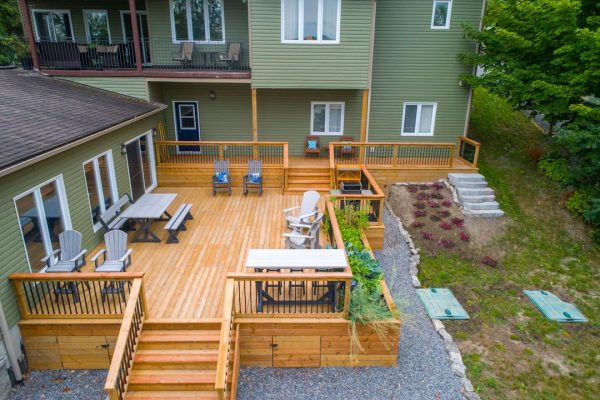
Building lovely and functional outdoor spaces begins with one of the most overlooked yet crucial decisions: selecting the deck board arrangement. Since outdoor living spaces serve as a significant extension of the home during spring, summer, and, at times, early fall, a well-designed decking pattern adds significantly to their aesthetic value, property appreciation, and reflection of your taste.
This guide will take you through some of the popular styles of patterning, along with considerations in choosing one for your space, climate, and design intent.
Why Does a Deck Pattern Matter?
Different deck materials (composite, PVC, wood) may have certain characteristics, but the laying style can make a world of difference to your terrace. Consider what a good pattern choice can do for you:
- It can change the perception of space (making a small area appear larger).
- Add visual interest without requiring complicated construction
- Express a sign of quality and attention to detail
- Promote drainage and life during Toronto’s rainy seasons
Factors to Consider Before Choosing a Pattern
Before settling on one pattern, consider the following:
• Size and shape of the deck:
Enlarged setups fit intricate patterns; simpler suits the little ones.
• Sunlight interface:
Crossed patterns could help reduce glare.
•Budget and labor:
More intricate patterns might have higher material and labor costs.
• Material type:
Due to ease of maintenance and flexibility, some patterns are better suited to composite or PVC than natural wood.
• Local climate:
Incorporated patterns should provide adequate drainage and stability to Toronto’s freeze-thaw cycles and damp springs.
Popular Deck Board Patterns
1. Horizontal Pattern
This is the most straightforward layout where boards run parallel to the house.
Advantages:
- Low costs
- Fast to install
- Little to no material loss.
Ideal for:
Medium to large decks of suburban Toronto homes.
2. Diagonal Pattern
This dynamic style features boards laid at 45 degrees to the house.
Advantages:
- Focuses on width for a more dynamic appearance
- Improved drainage
- Better structural support.
Ideal for:
Large decks, especially those more exposed to water.
3. Herringbone Pattern
Distinctive interlacing 45-degree angled boards that form a ‘V’.
Advantages:
- Striking,
- symmetrical,
- haute, and
- visually prominent.
Ideal for:
Large, visually prominent decks in upscale Toronto neighborhoods or custom designs.
4. Chevron Pattern
Boards cut in a continuous zig-zag form are often confused with the Herringbone style, but are more fluid in movement. You can also contact https://decksforlife.ca/ for more information.
Pros:
- Effortless and polished.
- Complements indoor lighting features
- Distinctive center of attention
Best for:
Must view zones like seats around hot tubs or dining areas outdoors.
5. Picture Frame Pattern
A border of boards encircling the outer edge of the deck frames the main pattern.
Pros:
- Visually appealing and polished
- Disguises cut ends of boards
- Versatile and blends well with other patterns
Best for:
Any deck in Toronto that wants a polished look.
6. Inlays and Accent Patterns
Logos or custom shapes and colors can be added for further enhancement.
Pros:
- Tailored to specific needs and uses
- Reflects the owner’s character
- Sparks conversation
Best for:
Feature decks or a deck designed for entertainment.
Conclusion
Selecting the right deck board pattern isn’t just about aesthetics—it’s about performance, maintenance, and behavior. Whether you’re relaxing in a quiet Toronto suburb or entertaining on a city lawn, the right pattern can revamp your outdoor living space into a stunning, long-lasting, and personalized retreat.